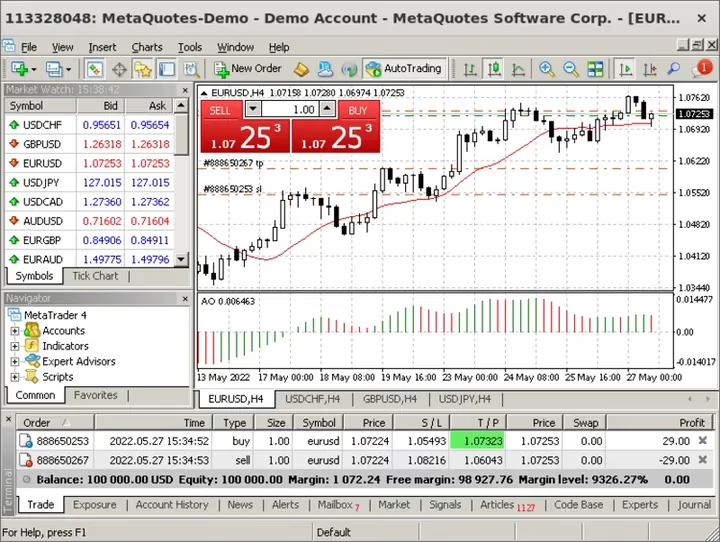
Why traders still pick MT4 over newer platforms
MetaQuotes stopped issuing new MT4 licences years ago, steering brokers toward MT5. But most retail forex traders kept using MT4. The reason is simple: MT4 works, and people trust what works. Thousands of custom indicators, Expert Advisors, and community scripts only work with MT4. Moving to MT5 means porting that entire library, and few people can't justify the effort.
I spent time testing both platforms side by side, and the differences are marginal for most strategies. MT5 adds a few extras including more timeframes and a built-in economic calendar, but the core charting is very similar. If you're weighing up the two, there's no compelling reason to switch.
MT4 setup: what the manual doesn't tell you
Installation takes a few minutes. The part that trips people up is the setup after install. By default, MT4 opens with four charts tiled across one window. Close all of them and open just the markets you follow.
Templates are worth setting up early. Build your usual indicators on one chart, then save it as a template. Then you can apply it to any new chart without redoing the work. Small thing, but over months it adds up.
Something most people miss: open Tools > Options > Charts and check "Show ask line." By default MT4 displays the bid price by default, which makes your entries look off by the spread amount.
Backtesting on MT4: what the results actually mean
MT4's built-in strategy tester lets you run Expert Advisors against historical data. That said: the reliability of those results copyrights on your tick data. The default history data from MetaQuotes is interpolated, meaning gaps between real data points are estimated with made-up prices. For anything more precise than a quick look, grab real tick data from a provider like Dukascopy.
Modelling quality is more important than the headline profit number. If it's under 90% means the results are probably misleading. I've seen people show off backtests with 25% modelling quality and ask why their live results don't match.
The strategy tester is one of MT4's stronger features, but the output is only useful with quality tick data.
MT4 indicators beyond the defaults
MT4 ships with 30 standard technical indicators. Most traders never touch them all. But where MT4 gets interesting lives in custom indicators coded in MQL4. You can find over 2,000 options, ranging from simple moving average variations to complex multi-timeframe dashboards.
The install process is painless: drop the .ex4 or .mq4 file into the MQL4/Indicators folder, refresh MT4, and you'll find it in the Navigator panel. The catch is quality. Community indicators are hit-and-miss. A few are solid tools. Others stopped working years ago and will crash your terminal.
If you're downloading custom indicators, look at when it was last updated and whether people in the forums report issues. Bad code won't just give wrong signals — it can lag the whole terminal.
Risk management settings most MT4 traders best metatrader 4 brokers ignore
You'll find some risk management options that the majority of users never configure. First worth mentioning is maximum deviation in the order window. This defines how much slippage is acceptable on market orders. If you don't set it and the broker can fill you at whatever price is available.
Stop losses are obvious, but MT4's trailing stop feature are worth exploring. Right-click an open trade, choose Trailing Stop, and set a distance. The stop moves with the trade goes in your favour. Not perfect for every strategy, but for trend-following it reduces the urge to stare at the screen.
These settings take a minute to configure and the difference in discipline is noticeable over time.
EAs on MT4: what to realistically expect
Automated trading through Expert Advisors have obvious appeal: program your strategy and stop staring at charts. In practice, the majority of Expert Advisors lose money over any meaningful time period. EAs sold with incredible historical results are usually over-optimised — they worked on past prices and break down once market conditions change.
That doesn't mean all EAs are a waste of time. A few people develop personal EAs for one particular setup: entering at a specific time, managing position sizing, or taking profit at set levels. That kind of automation work because they do defined operations where you don't need discretion.
If you're evaluating EAs, run them on a demo account for at least two to three months. Live demo testing is more informative than any backtest.
MT4 on Mac and mobile: what actually works
The platform was designed for Windows. Mac users has always been a workaround. Previously was Wine or PlayOnMac, which was functional but came with display glitches and stability problems. A few brokers now offer Mac-specific builds built on compatibility layers, which work more smoothly but remain wrappers at the end of the day.
On mobile, available for both iOS and Android, are surprisingly capable for monitoring your account and making quick adjustments. Doing proper analysis on a mobile device isn't realistic, but managing exits on the go is worth having.
Look into whether your broker has a proper macOS version or just Wine under the hood — it makes a real difference day to day.